Wandermio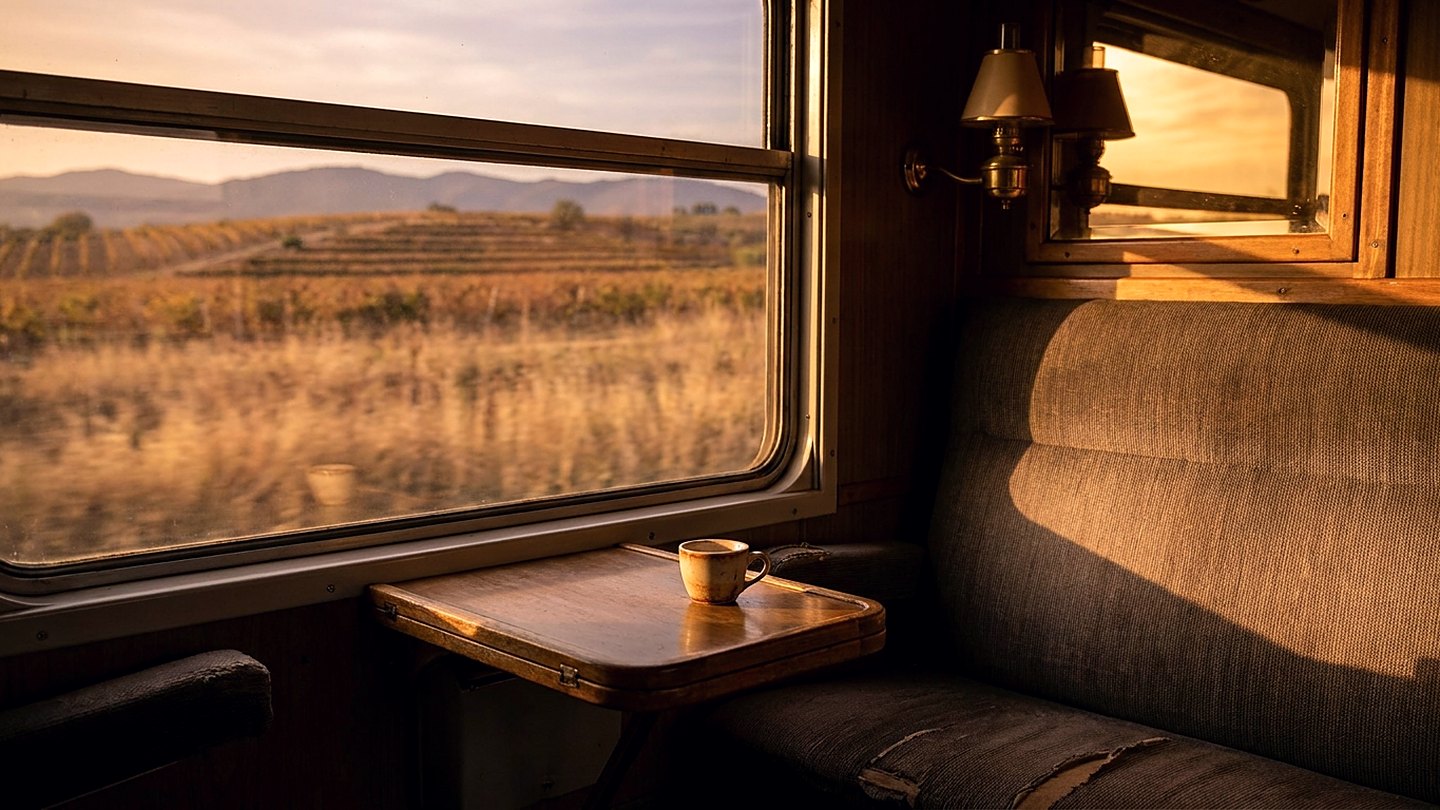
Train Days Across Europe: How I Build a Day on the Rails
My favorite hour in Europe is the one just before a morning train. The hall is half lit, someone is wiping down a counter, the board still shows last night's late arrivals, and the platform smells like cold metal and warm bread from a stand near the entrance. I like getting there early enough to be a little bored. Being bored at twenty to seven is a luxury, and it is the one part of a travel day I can reliably hand to myself.
It took me a while to see the rides as anything more than what stood between me and arriving. For years the train was the dull middle of a trip. Then a slow spring ride along the Rhone changed that. A train day is not a gap between two cities. It is one of the days, and I would rather it be a good one. Everything below is how I try to make that happen.
The two departures I trust
I ride early or I ride late, and I have stopped riding in between.
An early departure, somewhere between seven and nine, is the one that gives the most back. The station is calm, the seats are easy, the light on the first hour of countryside is the light I keep photographing, and I am in the new city before lunch. Bag down by one in the afternoon, a slow walk, a market, an early dinner, and the place has already started to make sense by dark. A city met in daylight on the first day behaves differently for the rest of the stay.
A late departure earns its place for the opposite reason. If I love where I am, an evening ride lets me keep the whole day: the last morning at a favorite counter, one more walk, a proper afternoon, and then the platform at half past six. The tradeoff is the arrival, which happens in the dark in a city I do not know yet. I only take the evening ride when I already know the walk from the station to where I am sleeping, or when it is short enough that a taxi line solves it without drama.
The middle of the day is what I avoid. A ride from eleven to four takes the two good halves of a day and leaves the two dull ones, and there is no scenery generous enough to make up for arriving too late to do anything and too early to sleep.
A train day is not a gap between two cities. It is one of the days.
Transfers with room to breathe
The single change that improved my train days most was refusing tight connections.
My floor is thirty-five minutes for any change of trains, and I raise it to an hour when a big city is involved. Large stations are not platforms, they are neighborhoods. A change can mean a long tunnel, two escalators, a slow elevator with a line of strollers and suitcases in front of it, and a platform number that only appears on the board twelve minutes before departure. Thirty-five minutes turns all of that into a walk. Twelve minutes turns it into a sprint with luggage, and a sprint with luggage is how you end up on a wrong train being kind to yourself about it.
I also plan one long change rather than three quick ones. If a day needs two connections, I make the first generous and the second easy, and I put the spare time where there is something to do with it: a station with a decent counter, or a town small enough to leave for forty minutes. Some of the afternoons I remember with real fondness came from a ninety-minute layover in a place I had no plans to visit, in Bruges once, and in a small Austrian town I remember mostly by the smell of its bakery.
Two practical habits go with this. I write the car number on the paper ticket or on my hand, because a long train can be three hundred meters of platform and the car you want is never in front of you. And I check where along the platform my car will stop, which most stations mark with letters overhead, because walking that distance beats walking it inside the train with a bag.
Bags, and where they live
The bag question sorts itself if you decide it before boarding rather than in the aisle.
The small bag rides with me, at my feet or on my lap, and it holds the things that would ruin the day if they went missing: documents, phone, charger, water, the paper ticket, a thin layer for a car that is colder than expected. Nothing goes overhead that I would not be calm about losing.
The large bag goes on the rack above the seat when it fits, and on the shelf at the end of the car when it does not. If it goes to the end shelf, I sit where I can see the shelf, which usually means the seats nearest the door, facing the right way. When I cannot see it, I loop the shoulder strap through the frame of the rack. It stops nothing determined, but it stops the quiet, opportunistic lift at a busy stop, which is the kind that actually happens.
Overnight rides get a different rule. Everything valuable comes into the seat with me, in a bag I can sleep against.
Which side of the sun is on
This is the small pleasure I have become tiresome about, and I stand by it.
Facing the direction of travel, in Europe the sun spends most of the day in the south. So an eastbound ride carries the sun on the right side of the car and a westbound ride carries it on the left, all day. A northbound ride gets morning light on the right and afternoon light on the left, and a southbound ride reverses that.
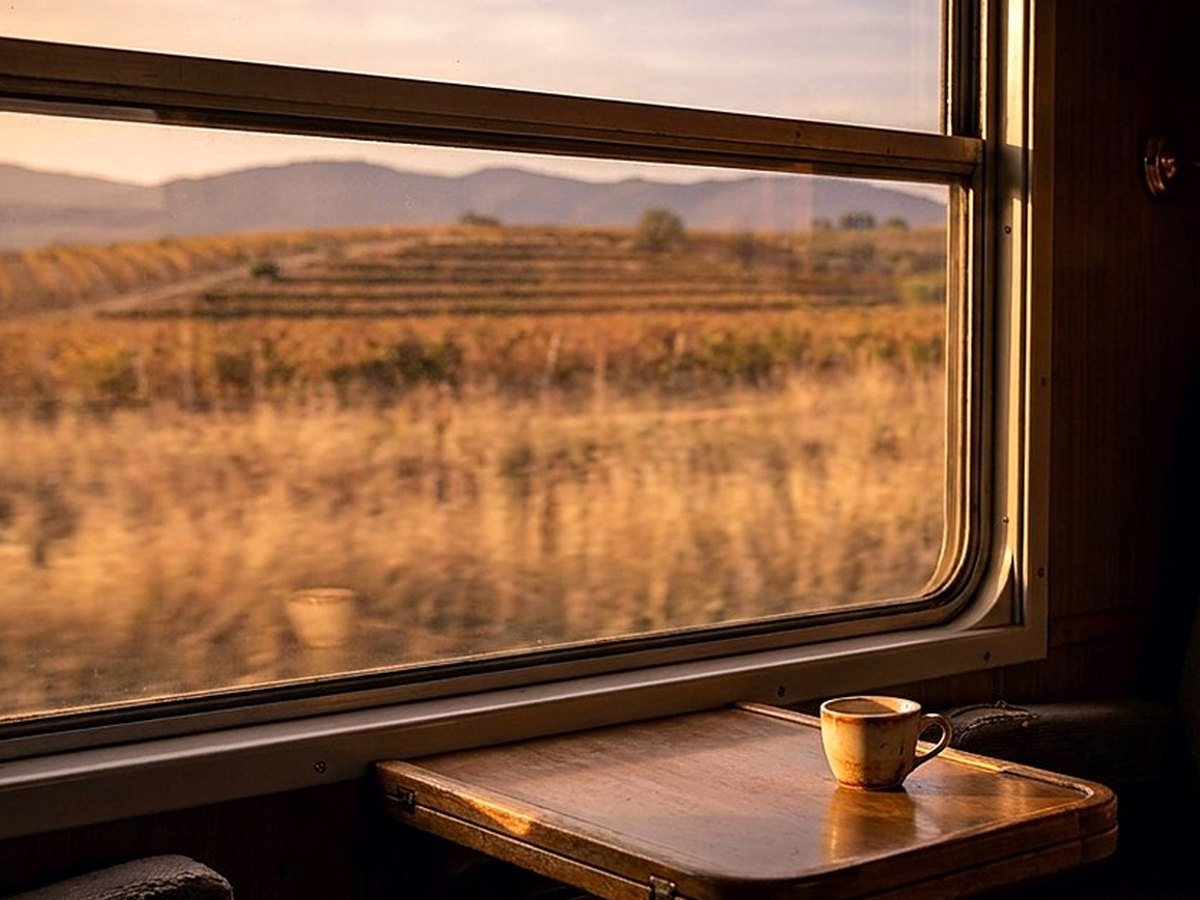
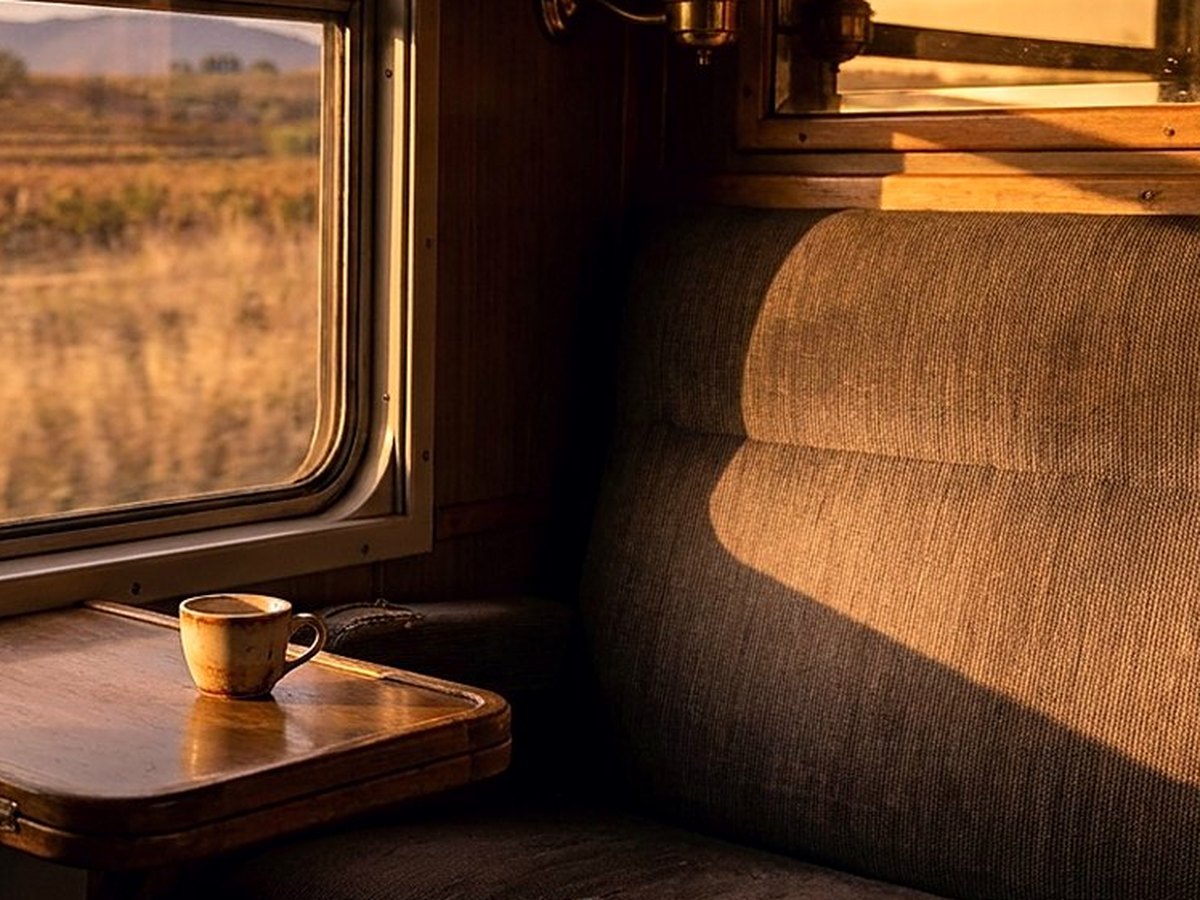
What I do with the rule depends on the month. In July I choose the shaded side and keep the glass cool for six hours. In late October I choose the sun and let the low light come across the seat while the fields go gold. On a coastal line I forget both and look at a map first, because the water is worth more than the temperature, and the same goes for a lake line through the Alps or a river valley where the good side is obvious once you look.
The other half of it is direction of travel. I take a forward-facing seat when I can choose one, both because the view arrives instead of leaving and because backward riding turns reading into a chore for me. Where seats are assigned and a seat map exists, I spend the extra minute on it. Where they are not, I board early and walk one car further than seems necessary, which is almost always where the quiet seats are.
When to ride, how to move, what waits outside the station
Weekday mornings in the shoulder months are the calmest riding I know. March, April, late September, and October give mild light, easy seats, and stations that are not working at capacity. Friday evenings and Sunday afternoons are the crowded ones on almost every route, along with the days on either side of a national holiday, and long rides on those days want a reserved seat rather than optimism. Summer brings heat in the cars on older regional routes, which is another argument for an early departure.
For moving through the day itself: many long-distance routes ask you to reserve a specific seat, and regional routes usually do not, so a mixed day can involve two different kinds of ticket and it is worth knowing which is which before the platform. Some regional tickets still need validating at a small machine near the entrance to the platform, and that machine is easy to walk straight past on a busy morning. Arrive fifteen minutes before departure at a small station and twenty-five at a large one. Platform numbers change more often than most people expect, so read the board once more after buying coffee.
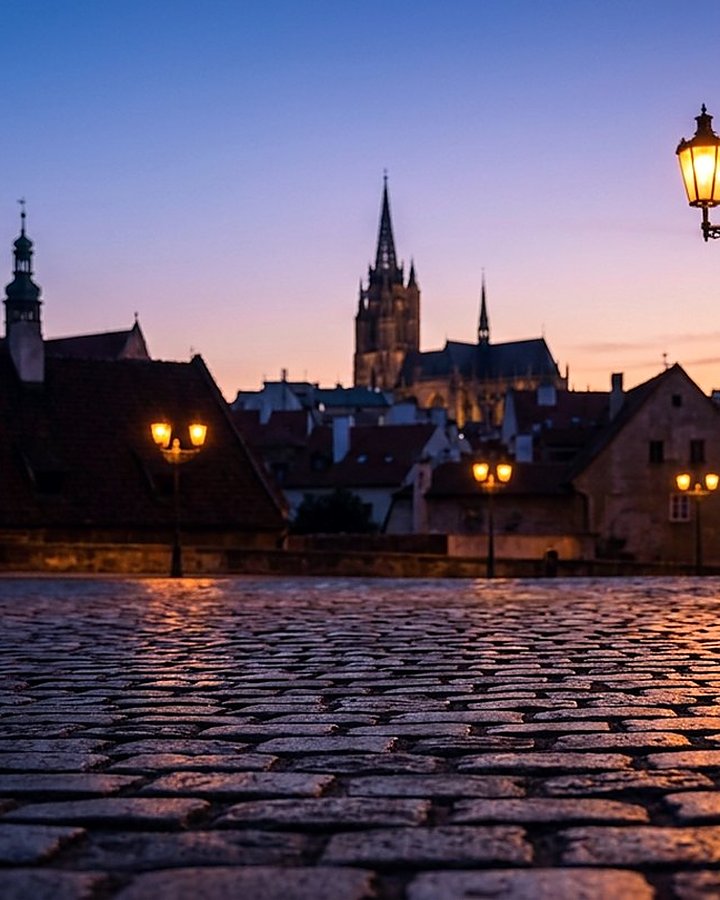
As for what waits outside the station, this is the quiet advantage of train travel: most European stations were built when the city was smaller, which means they sit inside or beside the old center, and the trip starts the moment the doors open. Before booking a room I check which station the route actually uses, because several cities have two or three, and the names differ by one word that is easy to misread at speed. Then I look at the walk. Under twenty-five minutes with a light bag and I walk it, through whatever the city puts between the platform and the front door, which in my experience is where the first good photograph of the stay tends to happen.
Ida Fenwick
Writes and photographs this blog from Charleston, West Virginia. More about the blog.
Read next
-
Photographing a City at Dawn
The half hour before sunrise gives you a city with the crowds edited out and the light improving by the minute. Here is how I choose the corner the night before and wait for the sun to come down the walls.
-
Eating Well Without a Single Reservation
I used to book dinner two months before a trip and then rush across a strange city to keep the promise. Now I book nothing, walk more, and eat better than I ever did with a plan.